แกลมปิ้งที่ Hilltop Erawan พักผ่อนกับบรรยากาศธรรมชาติ

The Hilltop Erawan
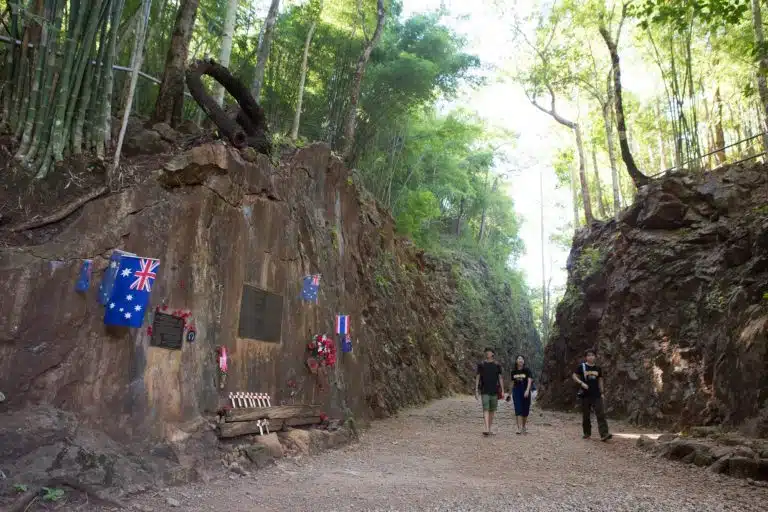
The beauty of Kanchanaburi speaks for itself. A little treasure cove of scenic splendours in Thailand remains shrouded in the mist to be explored. Nearby Attractions of tourist importance are plenty and some may be visited conveniently from Hintok River Camp at Hellfire Pass such as War Cemetery, Hellfire Pass Interpretive Centre and Memorial Walking Trail, Art Gallery and War Museum, The famous Bridge over the River Kwai (Death Bridge), Tiger Temple, Thailand Burma Railway Centre (Museum), Lawa cave, Mon Village & Temple, Somdet Phra Sri Nakharin Park, Don Chedi Archaeological Site, Erawan waterfalls, Prasat Muang Singh historical park, Saiyok Waterfall & National Park and etc.
The museum is under Australian management from the Office of Australian War Graves, whom are able to provide historical information on request about the railway and activities that occurred within that area to interested visitors. The Museum also has a theatre which shows a short video made from war footage of the construction of the railway and dialogue from a number of Australian ex-POWs.
Details: Open daily from 9 a.m. to 4 p.m.
How to get there: The site is located in a thick forest near Km. 66 of the Sai Yok-Thong Pha Phum Road (Highway No. 323).
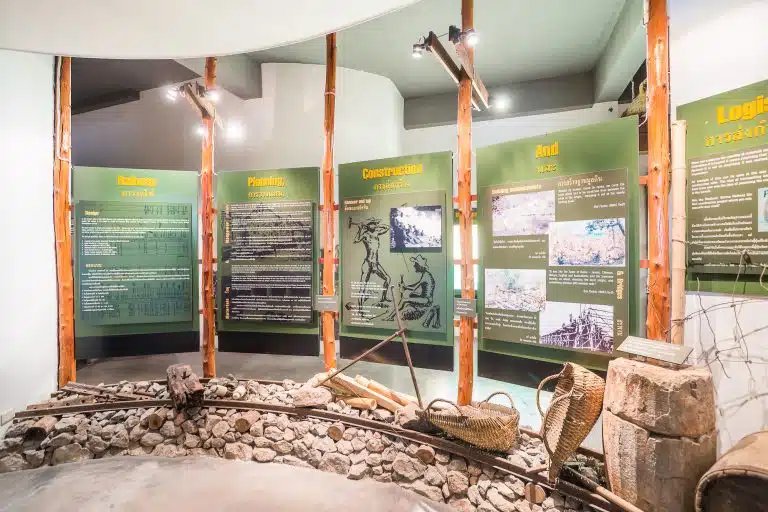
The Thailand-Burma Railway Centre is an interactive museum, information and research facility dedicated to presenting the history of the Thailand-Burma Railway. This ran 415 km from Ban Pong in Thailand to Thanbuyuzayat in Burma, and was built by the Imperial Japanese Army during the second World War using Allied prisoners of war and impressed Asian labourers. The Centre is fully air-conditioned and offers the visitor an educational and moving experience. TBRC Museum is located directly opposite the Kanchanaburi War Cemetery which is the largest in the area. The TBRC is run by extremely dedicated people , 3 Australians (who all have a link to the railway) and many locals who are charming and helpful. The Museum itself is very well set out and explains all areas of the experience of POWS (all nationalities) during the war and specifically construction of the (Death) railway. The centre was established by Rod Beattie who is the world expert on the railway. While you can learn an incredible amount from 1-2 hours in museum you can also take tours from 1/2 day to 4 day tailored to your needs or following the path of your relative on the railway
Details: Open daily from 9 a.m. to 5 p.m.
How to get there: It is located on the western side of the main Kanchanaburi War Cemetery (Don Rak) by approximately 100 meters.
Cycling around the area seeing rubber trees, local people at home in Baan Had Ngew – the local village and monks at the local temple.
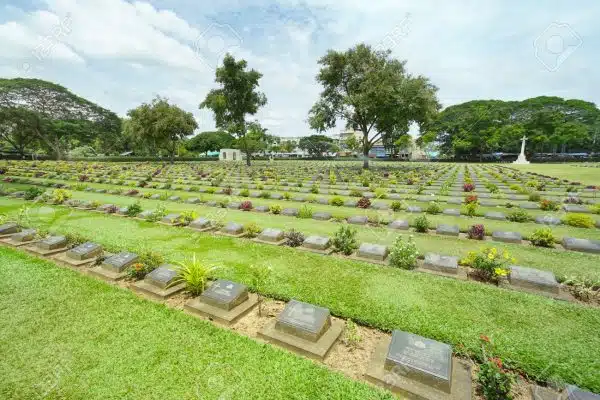
This is the place where the remains of 6,982 POWs died during the construction of the Death Railway are buried.
Details: Open daily from 8.30 a.m. to 6.00 p.m.
How to get there: The cemetery, which is located on Saengchuto Road(Highway 323), Amphur Muang, opposite the Railway Station, just 1.5 kilometres from the TOT office.
Details: Open daily from 9 a.m. to 5 p.m.
How to get there: It is located on the western side of the main Kanchanaburi War Cemetery (Don Rak) by approximately 100 meters.
The park, covering 550-square-kilometers, is the site of the seven-tiered Erawan waterfall, one of Thailand’s loveliest waterfalls. The falls take the form of a series of cascades and pools over and among the rocks, and are supposed to be shaped like the divine Indra’s three-headed elephant, hence their name.
Details: Open daily from 8.30 a.m. to 4.30 p.m.
How to get there: The national park is 65 kilometers from Kanchanaburi along Route 3199. Visitors may take a bus departing from the Kanchanaburi Bus Terminal to the waterfall every 50 minutes from 8.00 a.m. to 5.20 p.m. The journey takes 1.5 hours.

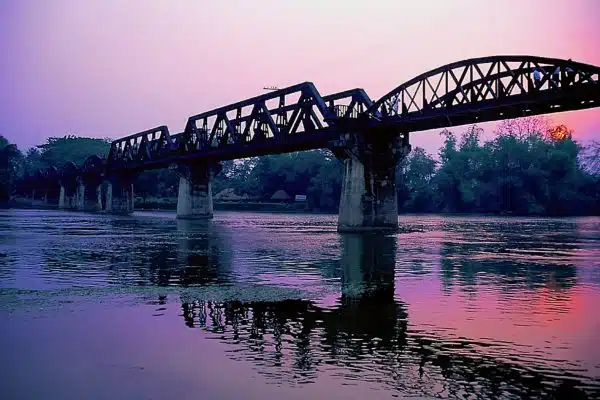
During the World War II, the Japanese wanted to seek to shorten the supply lines between Japan and Burma in preparation for an eventual attack on British India. The Japanese started work on a railway from Thailand to Burma through the river valley for a distance of about 415 kms. The Japanese enforced roughly 250,000 Asian laborers and 61,000 Allied prisoners-of-war (POWs) to construct 260 kms of rail on the Thai side, approaching the Three Pagodas Pass on the border. Unfortunately, it is estimated that 100,000 Asian laborers and 16,000 Allied prisoners lost their lives during that period due to many factors. Today there are daily trains running from Kanchanaburi to the terminus at Nam Tok station for a distance of 50 kms on this historical route. This journey is one of the very exciting things to do for tourists.
Details: Open daily 8.00 a.m. to 6.30 p.m.
How to get there: It is located north of the city by about 4 kms. Special trains are arranged for tourists from Bangkok on Saturday, Sunday and public holidays.
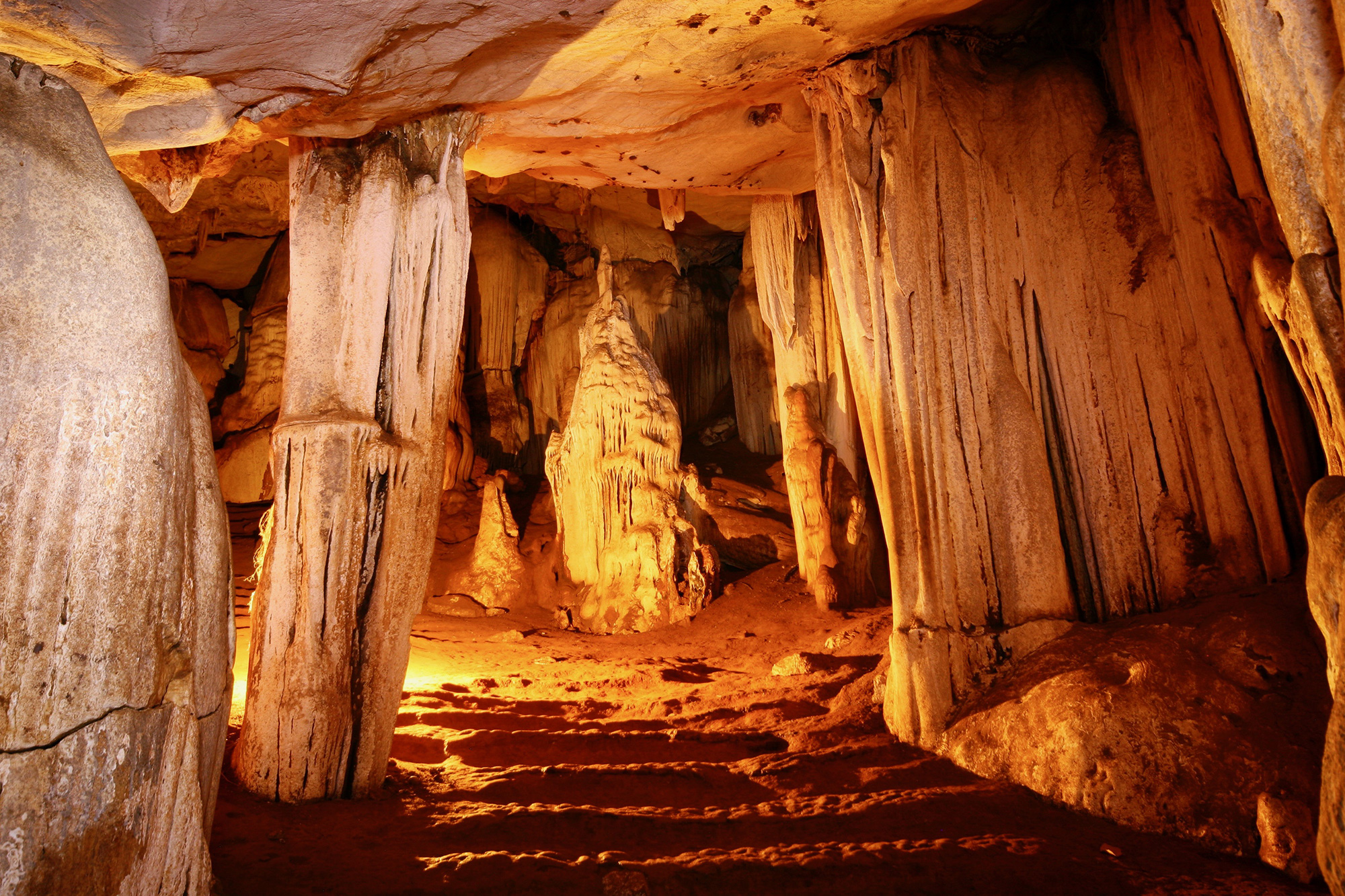
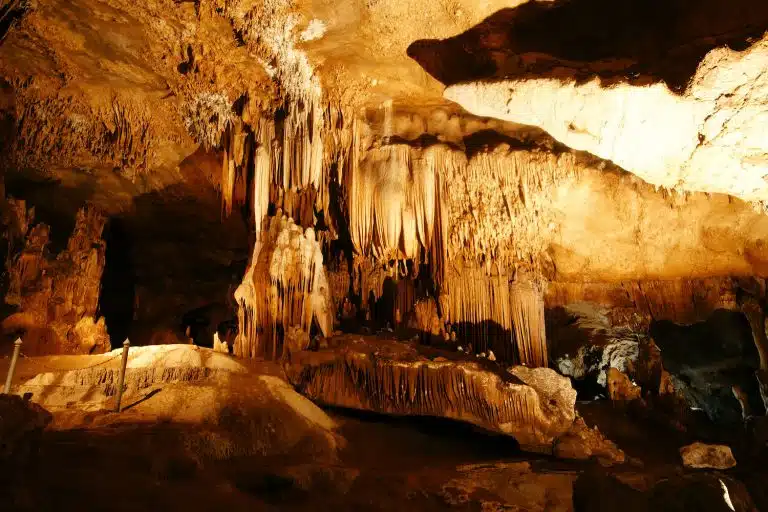
Lawa Cave is the largest cave in Kanchanaburi province. The cave is on the side of Kwai Noi River located in Saiyok National Park. The entrance is a bit narrow although the inner part is spacious with several chambers including the music chamber, the throne chamber, and the curtain chamber with stalactites and stalagmites in full display. There is also khun Kitti, the world’s smallest bat, live in the cave. The harmless Khun Kitti bat weighs only 2 g, is 2.5 to 3 cm long, has wing-span of 10 cm
Details: Open daily from 9 a.m. to 4 p.m.
How to get there: 75 kilometers from Kanchanaburi City. The cave can be accessed either by boat or car. Chartered boats are available at the Pak Saeng Pier, the trip takes 45 minutes. Visitors traveling by road can cross the bridge at Ban Kaeng Raboet and continue on foot. Our guests can book a boat ride to the cave.
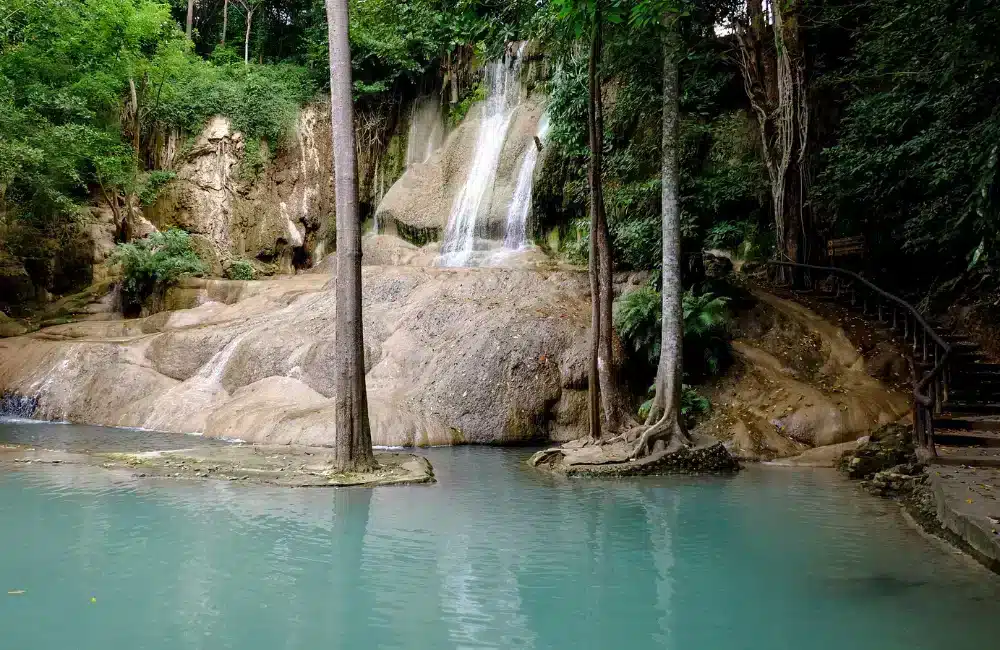
Sai Yok Noi Waterfall, also known as “Khao Phang Waterfall,” is located within Sai Yok National Park in Tha Sao Subdistrict, Sai Yok District, Kanchanaburi. It is one of the most beautiful waterfalls in the province, surrounded by lush and tranquil nature. The waterfall’s basin is not very deep, making it a perfect spot for photography or for bringing children to enjoy a safe and relaxing time in the water.
.
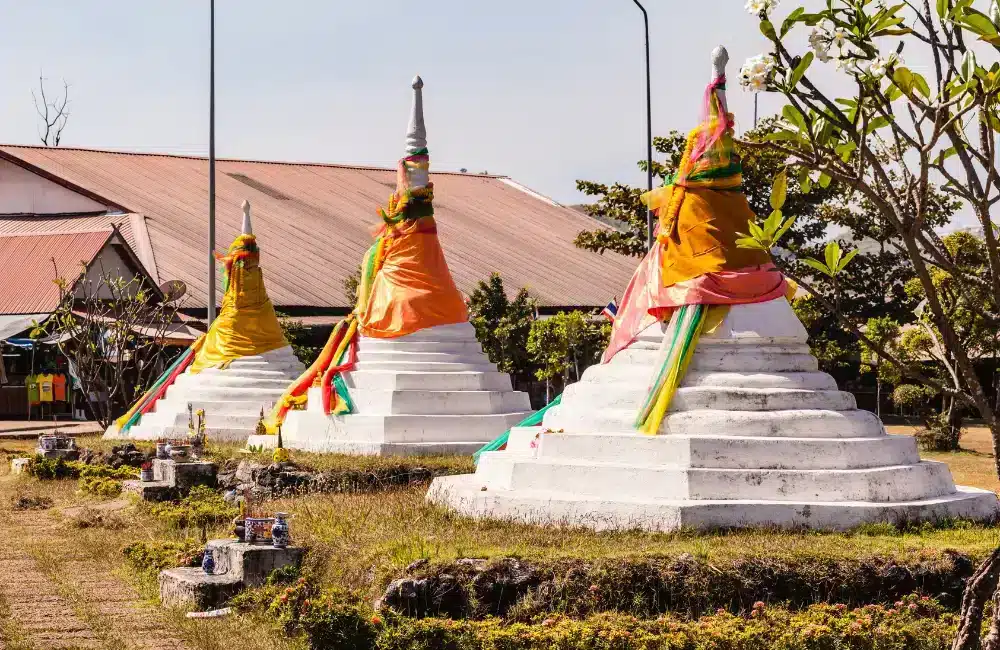
In ancient times, the Three Pagodas were merely three piles of stacked stones, serving as a sacred site for Thai travelers crossing the border into Burma. Later, in 1889, the governor of Sangkhla Buri, along with local residents, constructed pagodas over the stone piles, creating the Three Pagodas we see today. If you’re traveling along this route, don’t forget to stop and pay your respects for blessings and good fortune in your life.
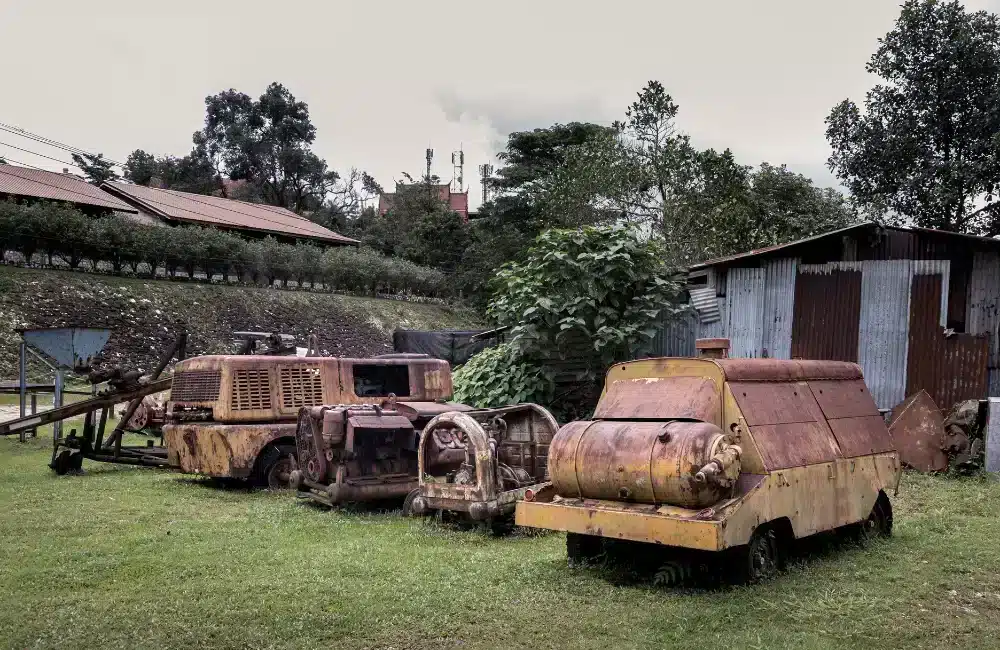
Pilok Mine, located in Ban E-Tong, Thong Pha Phum District, is nestled in a village covered with mist year-round. Once an active mining site for the villagers, it has since been abandoned and transformed into a tourist attraction. The mine still houses old equipment, vehicle remains, and dilapidated buildings, offering a classic and vintage aesthetic that makes for stunning and unique photographs.
.
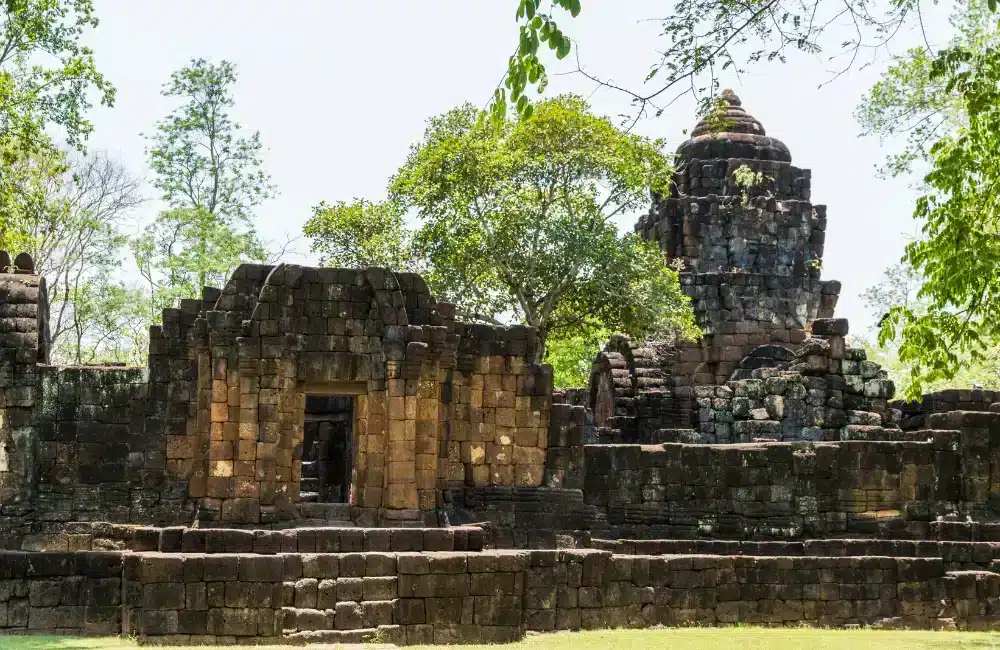
Mueang Sing Historical Park is the only Khmer-style historical park in Kanchanaburi, located along the Khwae Noi River in Sing Subdistrict, Sai Yok District. The park features architecture and sculptures resembling those from the era of King Jayavarman VII, the renowned Khmer king known for building temples. For history enthusiasts, this site is a must-visit destination to explore and learn about the region’s rich cultural heritage.
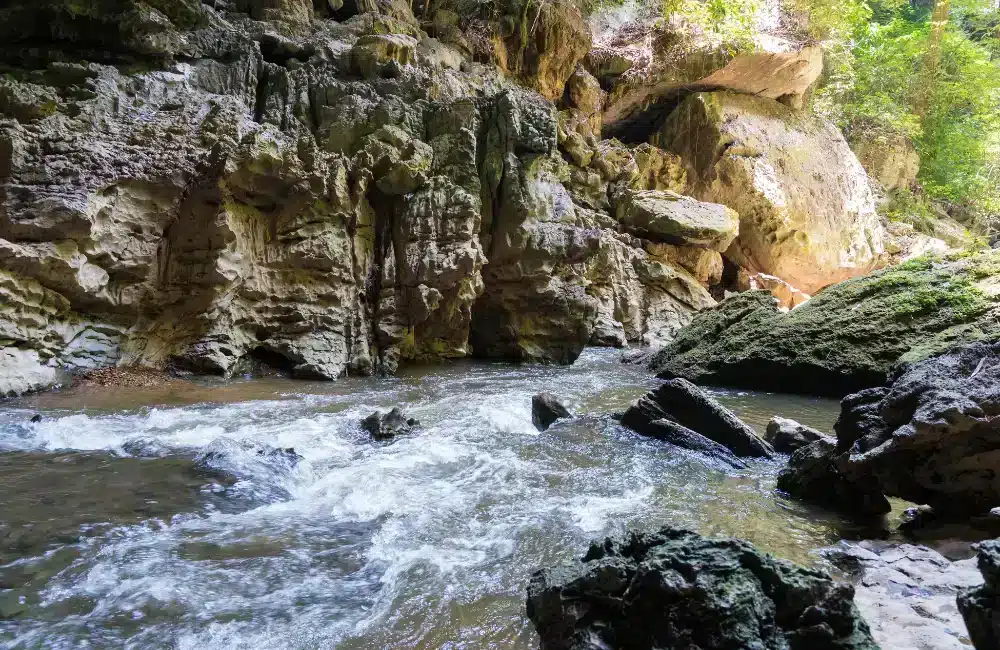
If you’re looking for an off-the-beaten-path adventure to experience breathtaking nature and rare, unique sights, Lam Khlong Ngu National Park is a must-visit. The park offers a variety of activities, including hiking, rock climbing, swimming, diving, and exploring the Swallow Cave. It promises to be an exciting trip filled with unforgettable experiences.
.
 English
 ไทย
ไทย